A16N: Recife to Reykjavik
March 6, 2023
Overview
GO-SHIP A16N ran in two legs aboard the R/V Ronald H. Brown, from Port Saupe, Brazil, to Rota, Spain (Leg 1, March 6 to April 6/7, 32 days at sea) and from Rota to Reykjavik, Iceland (Leg 2, April 13 to mid-May), together re-occupying all 150 planned stations along the transect.
Chief scientist Denis Pierrot (AOML) was unable to sail due to a medical emergency in Brazil, so Zach Erickson (PMEL) and Katelyn Schockman (AOML) served as chief scientists for Leg 1, continuing through Leg 2.
The cruise supported full water-column CTD/rosette sampling plus daily bio-casts to 1000 m for particulate organic carbon and phosphorus, eDNA/eRNA, and phytoplankton pigments, alongside a strong Bio-GO-SHIP presence (dedicated inline plankton imaging system) and deployment of Core Argo, BGC-Argo, and EM-Apex floats and SVP drifters.
Operations
The team weathered a run of equipment problems: a winch wire short at 5,000 m and repeated altimeter failures early in Leg 1 (including two cast hits on bottom before sediment-clogged sensors were identified and cleared), persistent forward/aft winch handoffs (vibration issues on the forward winch, later an oil leak on the aft winch), CTD oxygen sensor disagreement requiring a likely post-cruise correction, and the loss of a full CTD package during recovery at Station 26, replaced from backups within eight hours before spare parts were shipped ahead to Rota for Leg 2.
Leg 1 was ultimately cut two weeks short of its full complement (75 of 80 stations) by thruster/engine (Z-drive) problems, with the missing five stations picked up at the start of Leg 2.
The final station, in Iceland at only 200 m depth, was completed in 30+ knot winds with just minutes to spare before conditions would have prevented deployment.
Scientific highlights
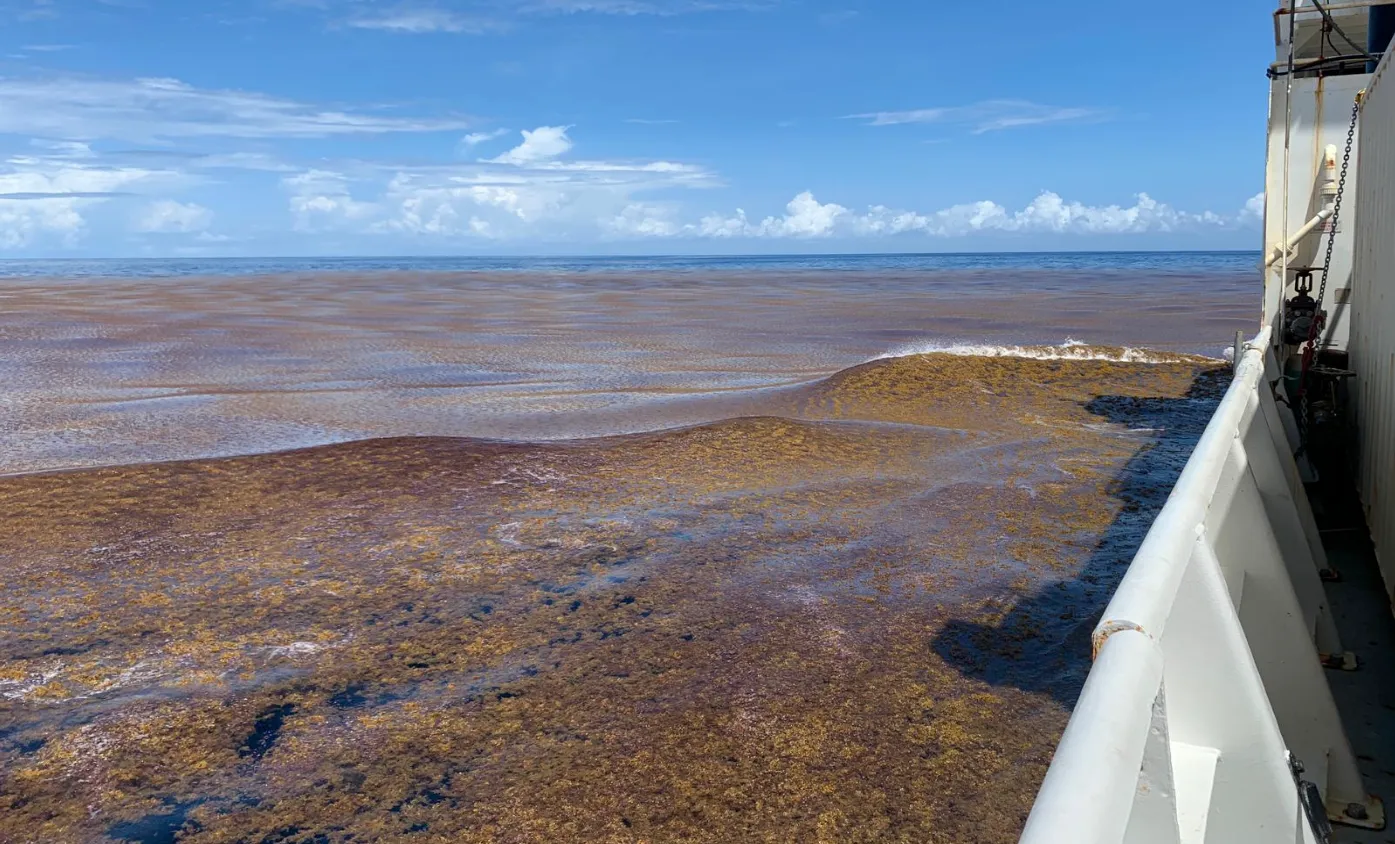
Scientific highlights included sailing through the Great Atlantic Sargassum Belt and collecting 68 Sargassum samples (three species) across both legs, observing sharp Mediterranean Water temperature/salinity staircases and meddies (Stations 89 and 94) on the return leg north, and sampling what may have been the North Atlantic spring phytoplankton bloom via flow cytometry (a shift from Prochlorococcus- to Synechococcus-dominated communities).
Fun facts
The crew crossed the equator on March 13, collecting “equator water” mementos and crush-testing decorated Styrofoam cups on the CTD; five foreign nationals boarded Leg 2 in Cadiz via a water taxi named “Obama”; a BGC-Argo float was christened “Lucille”; onboard entertainment included a March Mammal Madness bracket, ping-pong and triathlon (rowing/biking/running) tournaments, and arts and crafts; and wildlife sightings included dolphins, squid, flying fish, a meteor shower, a northern gannet, and a pod of pilot whales that followed the ship for hours as they approached Reykjavik.